MVP Launch Timeline for 2026: 8-Week Playbook That Gets You to First Revenue
Launching an MVP in 2026 demands more than just coding fast. The smartest founders treat the eight weeks before revenue as a disciplined sequence of validation, scoping, building, and traction. This playbook removes the guesswork that kills most early-stage products before they ever see a paying customer.
By following this timeline, you avoid the classic traps: building features nobody wants, launching to silence, and burning runway on unvalidated assumptions. Each week builds on the last, turning uncertainty into measurable progress toward that first invoice.
Weeks 1-2: Validate Demand Before You Build Anything
Spend the first fourteen days talking to at least 40 potential customers. Use short, structured interviews focused on their current workflow pains rather than pitching your idea. Create a one-page landing page with a waitlist and run targeted ads or outreach to drive 200-300 visitors. Track how many actually join the list and what search terms they use. If you cannot get 15% conversion from visitor to waitlist signup, rethink the problem you're solving. This phase typically costs under $400 and prevents months of wasted development.
Weeks 3-4: Lean Scope and Choose Your Build Path
Translate interview insights into a brutally minimal feature set. Map every user story to one of three categories: must-have for first revenue, nice-to-have, or future phase. Limit the MVP to three core screens maximum. Decide your build route based on speed and your own capabilities: no-code tools like Bubble or FlutterFlow for non-technical founders, or a lean tech stack with Supabase and Next.js if you code. Create a simple clickable prototype in Figma and run it past ten people from your waitlist. Adjust based on their reactions before writing a single line of production code.
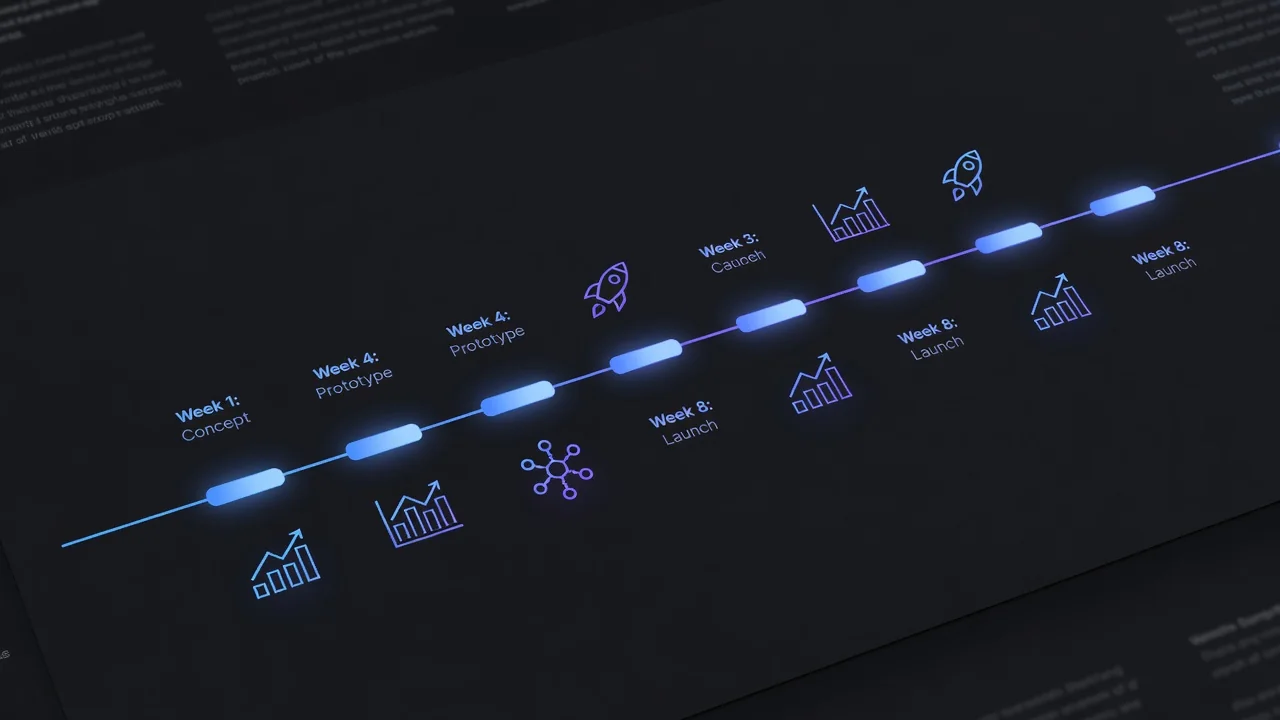
| Week | Focus | Key Deliverable | Success Metric |
|---|---|---|---|
| 1-2 | Validation | Interview notes + waitlist page | 15%+ conversion |
| 3-4 | Scoping | Feature matrix + prototype | 80% positive feedback |
| 5-6 | Build | Working MVP | Internal demo passes |
| 7-8 | Launch & Revenue | Live product + sales sequence | First paying customer |
Weeks 5-6: Build the Actual MVP
Now execute. If using no-code, configure your database, authentication, and core user flows first. If coding, set up the project with strong foundations for future scaling. Implement only the scoped features. Build in basic analytics from day one so you can track every user action. Test internally with fake data, then invite five waitlist members for closed beta access. Fix every friction point they report immediately. The goal is a stable product that solves one clear problem reliably, not a polished app with ten half-baked features.
During this phase, prepare your onboarding sequence. Write clear first-use instructions and create a 90-second demo video. Set up Stripe or your chosen payment provider even if you won't charge during beta. Many founders lose their first revenue opportunity simply because checkout wasn't ready when a prospect asked to buy.
Weeks 7-8: Pre-Launch Traction and First Sales
Shift from building to selling. Email your full waitlist with a personal note explaining what you learned from their feedback and how the product now solves their specific problem. Offer early-bird pricing with a clear deadline. Post daily in relevant online communities, sharing behind-the-scenes insights rather than generic marketing messages. Run a small targeted ad campaign to your ideal customer profile. Schedule five sales calls for the launch week. Your job is to convert, not just launch.
- Personalized outreach to every waitlist member
- Live demo sessions twice during launch week
- Simple onboarding email sequence with success stories
- Post-launch survey to gather testimonials immediately
- One clear call-to-action on every communication channel
The final days should feel like a focused sprint toward revenue rather than a chaotic public launch. When the first customer pays, celebrate briefly then immediately ask for a testimonial and introduction to one other person who faces the same problem. This creates the flywheel that turns your MVP into a real business.
Following this exact sequence has helped dozens of 2025 founders reach first revenue within eight weeks while keeping their burn rate low and learning maximized. The key is discipline: never move to the next phase until the current week's success metric is hit. In 2026, the founders who win won't be the ones who build fastest, but those who validate, scope, build, and sell with intention.